meister
bauhaus
bookshelf
BAUHAUS SOURCES FOR DOWNLOAD
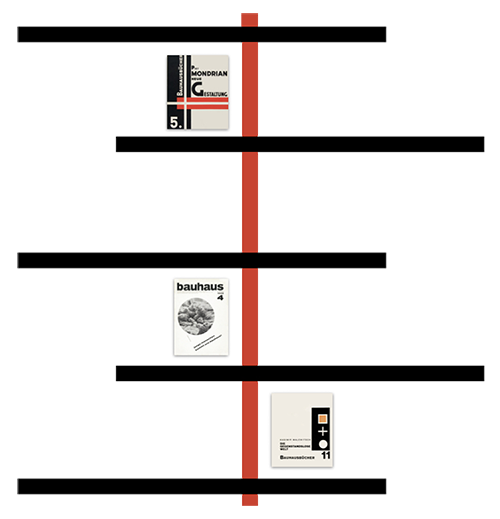
my modest contribution to #bauhaus100 and beyond: the original bauhaus books and journals in a virtual bookcase - with the possibility to download and take a closer look at the media, supplemented by excerpts and contributions by bauhaus people and contemporary witnesses or other content in context.
andrea riegel wishes you pleasant reading
BAUHAUS MANIFESTO 1919
Architects, sculptors, painters, we must all turn to crafts. Art is not a »profession«. There is no essential difference between the artist and the craftsman. The artist is an exalted craftsman. In rare moments of inspiration, moments beyond the control of his will, the grace of heaven may cause his work to blossom into art. But proficiency in his craft is essential to every artist. Therein lies a source of creative imagination.
From the first self-portrayal of the Bauhaus, the manifesto and program was signed by Walter Gropius in April 1919. On the title of the 4-page leaflet the well-known woodcut »Cathedral« by Lyonel Feininger is depicted.
PDF (24 MB) via monoskop.org
STAATLICHES BAUHAUS IN WEIMAR 1919–1923
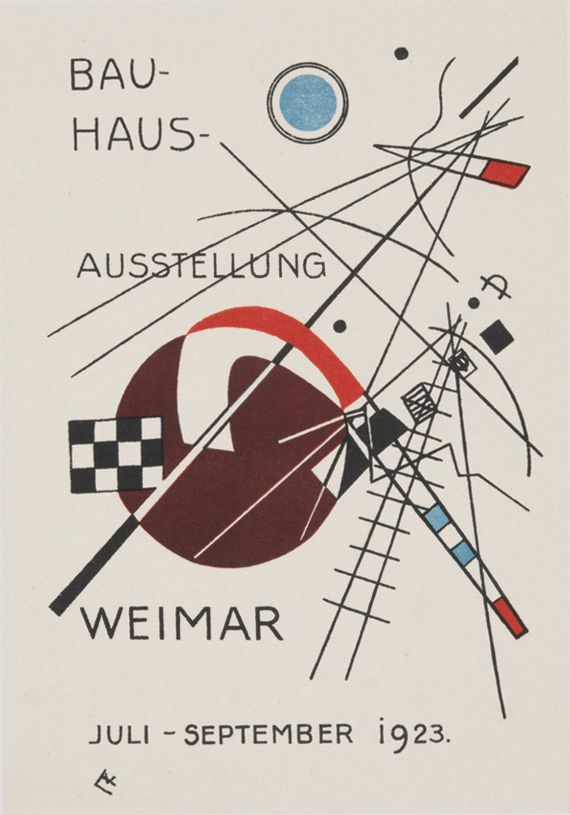
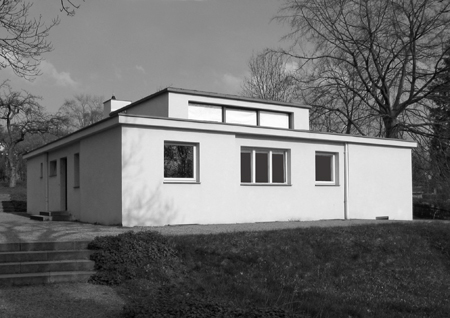
The »Bauhaus Week« in 1923 provided the setting for the launch of the first public Bauhaus exhibition, which was, however, put on by the State Assembly of Thuringia and against the will of the director Walter Gropius. The motto was »Art and Technology - a new unity«, the particular focus was on architecture. The works of the workshops were shown in the academy and in the experimental single family home »Haus am Horn«. Lectures and musical events accompanied the exhibition. Hindemith, Busoni, Weill and Stravinsky were present and performed their works. The audience also experienced Oskar Schlemmer's »Triadisches Ballett« at the National Theatre in Weimar. The guests came from near and far, the popularity was great, but so was the criticism from reactionary circles.
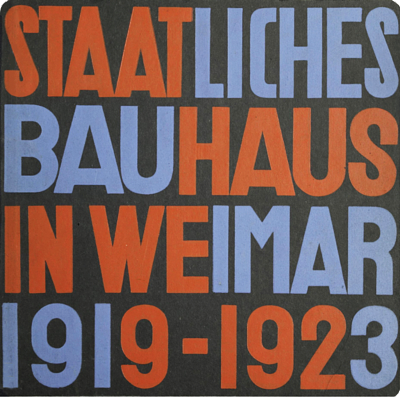
Issued on the occaison: the first book published by the Bauhaus. Cover design Herbert Bayer, 1923, printed after drawn script, 25 x 25.5cm. Source: SLUB Dresden
BAUHAUS WORKSHOPS
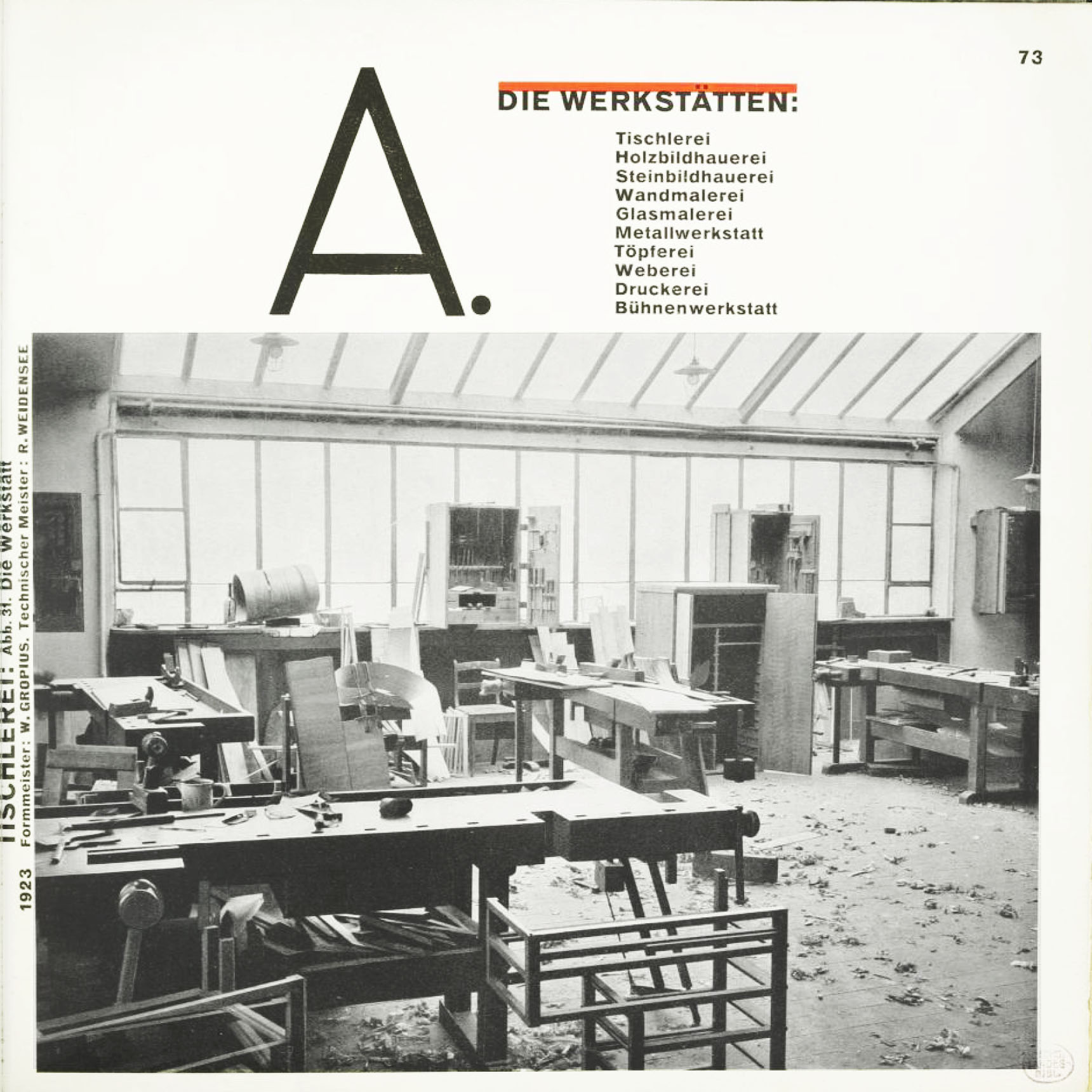
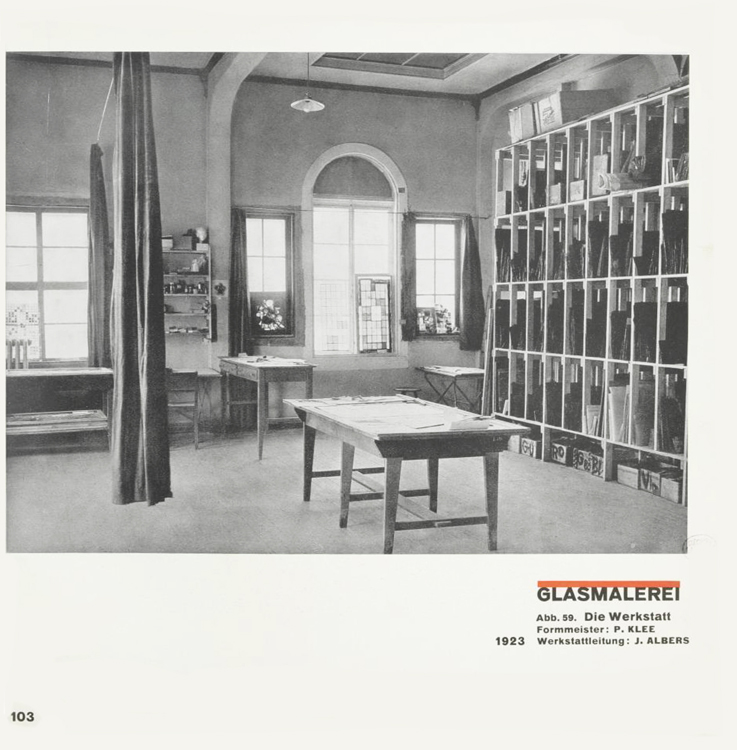
STAINED GLASS
Form master:
Paul Klee
Technical direction: Josef Albers
CARPENTRY
Form master:
W. Gropius
Crafts master:
R. Weidensee
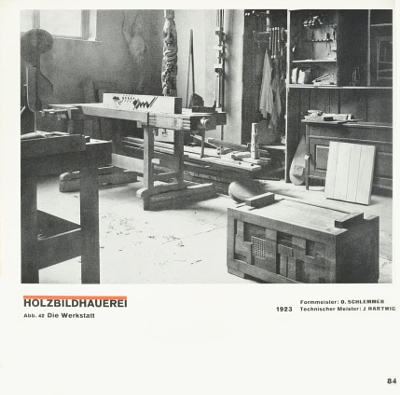
WOODEN SCULPTURE
Form master:
Oskar Schlemmer
Crafts master:
Josef Hartwig


MURAL PAINTING STORAGE
Form master:
Wassily Kandinsky
Crafts master:
Heinz Beberniß
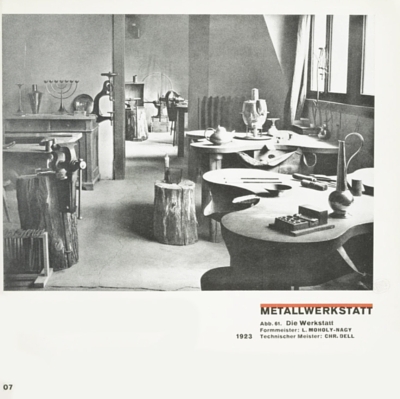
METAL WORKSHOP
Form master:
L. Moholy-Nagy
Craft master:
Christian Dell
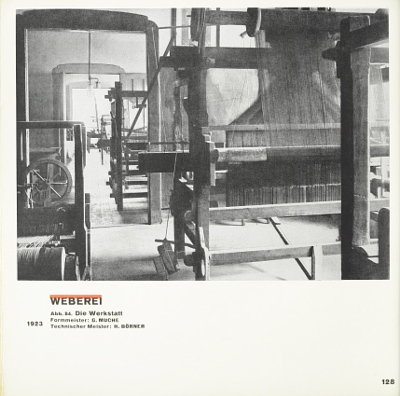
WEAVING
Form master:
Georg Muche
Crafts master:
Helene Börner
PRINTING
Form master:
Lyonel Feininger
Crafts master:
Karl Zaubitzer
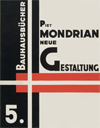
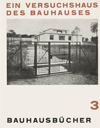
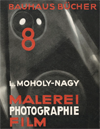
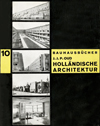
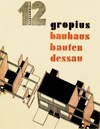
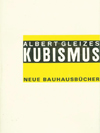
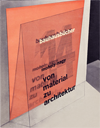
THE BAUHAUS BOOKS 1924–1930







THE BAUHAUS TEACHING
”
The Bauhaus has become known and effective above all as the nucleus of what is now called »design«. Walter Gropius, however, aimed much more with his art school founded in Weimar in 1919. The underlying concept of a comprehensive aesthetic education aimed to abolish the hierarchy between »high« and »low« arts and to reunite the various genres in the »building«. The students were to be trained both artistically and in craftsmanship. The Bauhaus thus placed itself in the romantic tradition of the Gesamtkunstidee, which sought to restore the old unity of craft, technical and artistic production lost through industrialisation, which had once been taken for granted in the medieval cathedral and baroque palace architecture. But why were the first Bauhaus teachers not architects and craftsmen, but painters? Regine Prange, 2001.
From Art History Worksheets of the Johann Christian Senckenberg University Library. Source: University of Frankfurt
”
The Bauhaus was a school. Many authors, after mentioning this fact, tend to forget it. When so many trees are counted, the forest disappears. You talk endlessly about people, their works, their ancestors and descendants, you show the inevitable concentric scheme of the course, but you are very discreet about the institution. [...] It looks as if one is reluctant to accept the common and unimportant details of the life of an educational institution. This behavior reinforces the idea that there is a piece of miracle at the Bauhaus.
From: »What one knows, believes to know and ignores about the bauhaus.« Claude Schnaidt, the Swiss architect and student of Max Bill, written for the 1st Bauhaus Colloquium in Weimar, 1976.

PAUL KLEE
”
Today I presented my first lecture, and the extraordinary case occurred that I spoke to the people for two hours off. Klee to his wife Lily, 1921
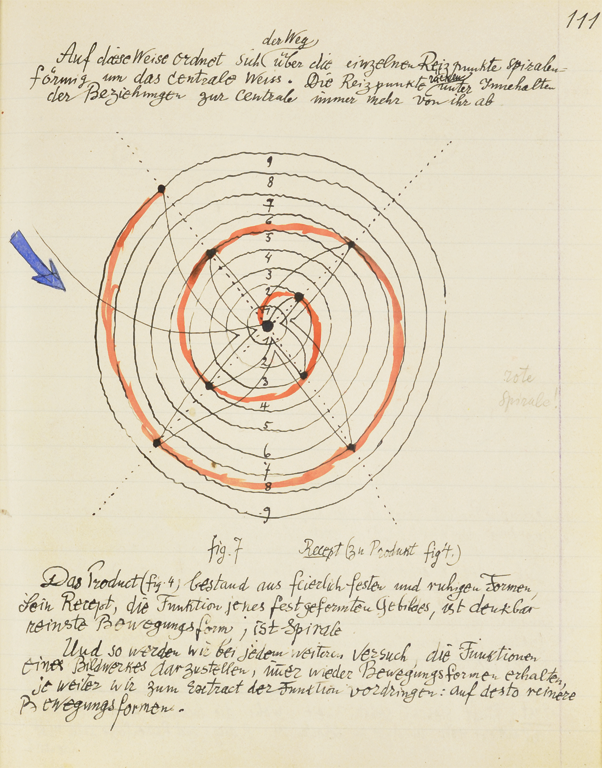
Paul Klee was active at the Bauhaus as a lecturer – called master – between 1921 and 1931 beside Wassily Kandinsky, Lothar Schreyer or Oskar Schlemmer. During this time Klee wrote lecture notes on Pictorial Formation and made around 3,900 pages of teaching notes, which he described in its entirety as Teaching Notes on Pictorial Creation. He did not teach emerging artists, but as he said himself »creators, working practitioners«. Like Walter Gropius he was convinced that art itself cannot be taught, but can only arise through intuition. The aim of his teaching was to convey to the students the fundamental principles of pictorial creation.
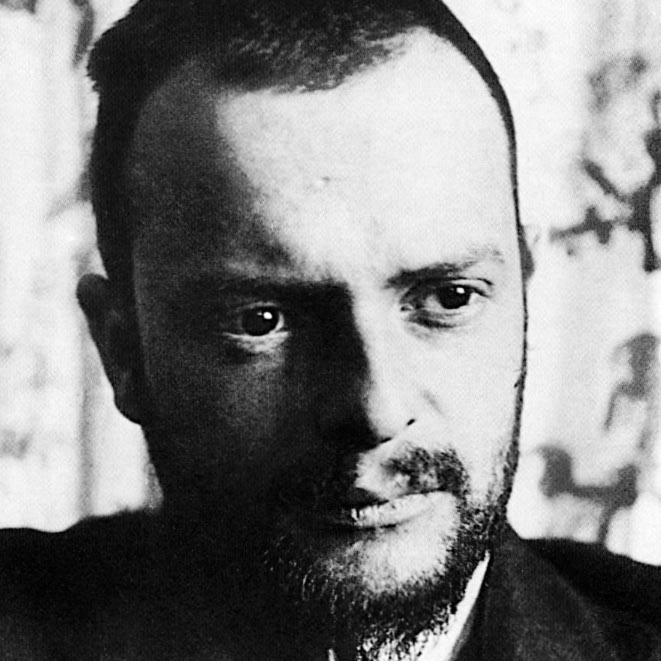
Paul Klee, 1911. Photo: Alexander Eliasberg. Source: wikipedia
Pictorial Formation
Notes from the lessons in Weimar

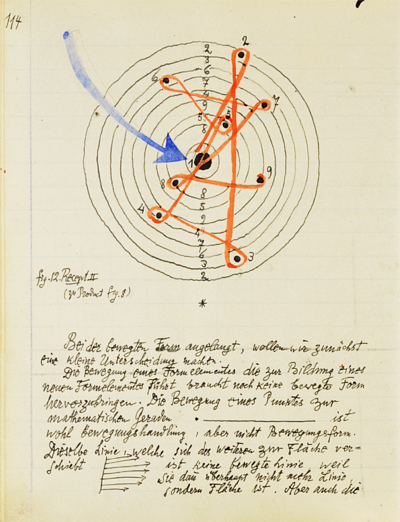


Paul Klee, Pictorial Formation, the moving form
Paul Klee, Pictorial Formation, the red spiral
I premise that no one discovered the fish of Columbus
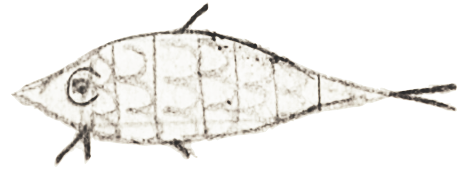
Teaching notes on Pictorial Creation
”
The determination of pure red is more difficult than the determination of the other two colored elements. Thus, since pure blue and pure yellow are more solid than pure red, pure red is set up in such a way that it is a good violet with pure blue on the one hand and a good green with pure yellow on the other hand. Then a lot has already been won.
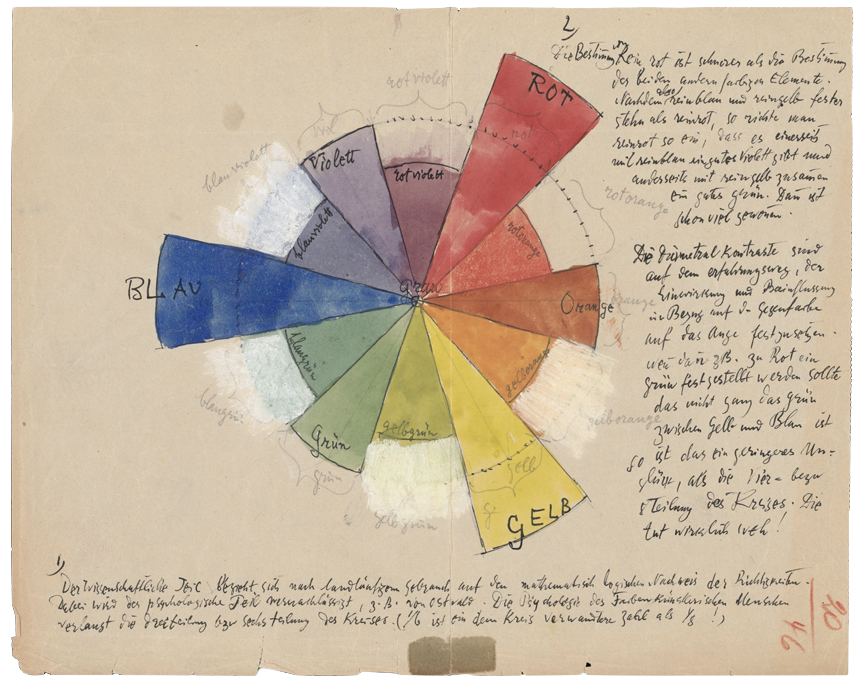
Pictorial Creation: I.2 Principielle Ordnung, BG I.2/157. Zentrum Paul Klee Bern
Lecture cycles from Weimar, Nov. 1921 (winter semester) to the end of 1922. Source: Zentrum Paul Klee Bern
3,900 loose manuscript pages, he probably arranged them in 1928. Source Zentrum Paul Klee Bern
Great exhibition catalogue and overview about the artist and his works by Zentrum Paul Klee Bern. Download via Fondacion Juan March
”
Lessons with Klee
In the second semester, i.e. in the first workshop semester, lessons began with Paul Klee and continued in the following semester. Klee spoke very little.
He drew sketches on the blackboard and gave brief explanations. We copied these sketches, which formed the basis for tasks that we then had to carry out at home. In his criticism Paul Klee always tried to understand our intentions, gave short suggestions and encouraged us to further develop our ideas. In his teaching he dealt with the laws of surface as well as the relationships between forms and colours.
For us weavers his explanations were extremely important, because they helped us to overcome the all too playful in our designs and to create stricter compositions.
Because of his often too short explanations, we had trouble grasping the full meaning of his thoughts, and it was not until later that we were able to understand them in our practical work. In addition to the actual lessons, from time to time there were discussions with the weavers, during which Klee critically examined the fabrics.
Lena Meyer-Bergner, 1978
Source: form + zweck, 1979
Paul Klee – Bildnerische Gestaltungslehre,
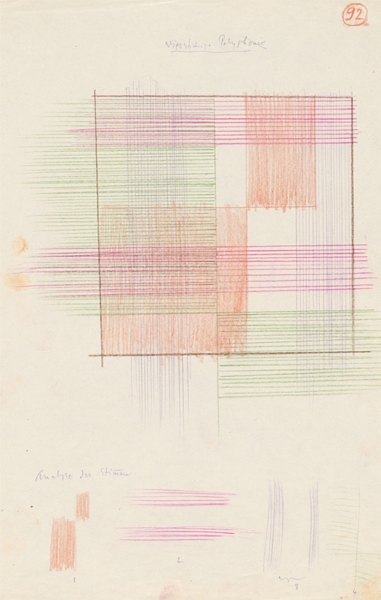
»four-sided polyphony« BG I.4/129. Source: ZPK Bern
It’s unforgettable how he explained a complicated subject on the blackboard such as polyphony, which he described as a simultaneous, multi-dimensional phenomenon; in each hand a chalk of a different colour, drawing and writing with both hands.
Helene Schmidt-Nonné
WALTER GROPIUS ISE GROPIUS

last will 1933
burn me, but don't demand the ashes back!
the slag piety is half a thing; get rid of it!
don't wear mourning either! it would be nice if all my friends of the present and past would come together a little later for a bauhaus-style party - drinking, laughing, loving.
then i'll certainly join in - more than in life!
it's more fertile than eulogies! love is the key!!
Ise, whom I have loved the most, please order
and administer my spiritual estate, as far as material things exist, act according to your judgement! think of Ati, whom I love! (june 1948)
walter gropius
WOMEN AT THE BAUHAUS
GUNTA STÖLZL
”
Weimar, fall of 1919. What did I find? A small group of students, more men than women. A large building with studios, some of which were occupied by the old academy, next to it large empty rooms, a workshop building, a canteen, a studio house for students, but only for men. Finding a room was not difficult. But where could one work? Which craft did you feel attracted to?
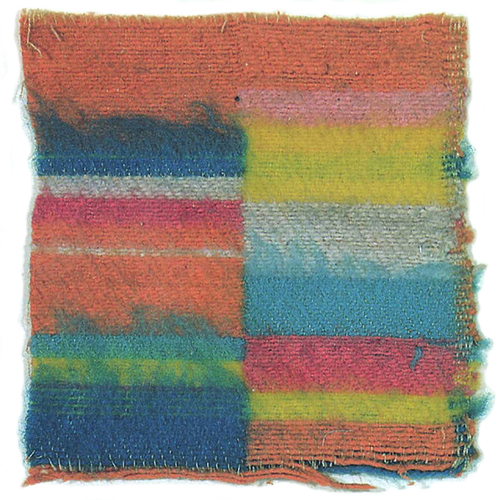
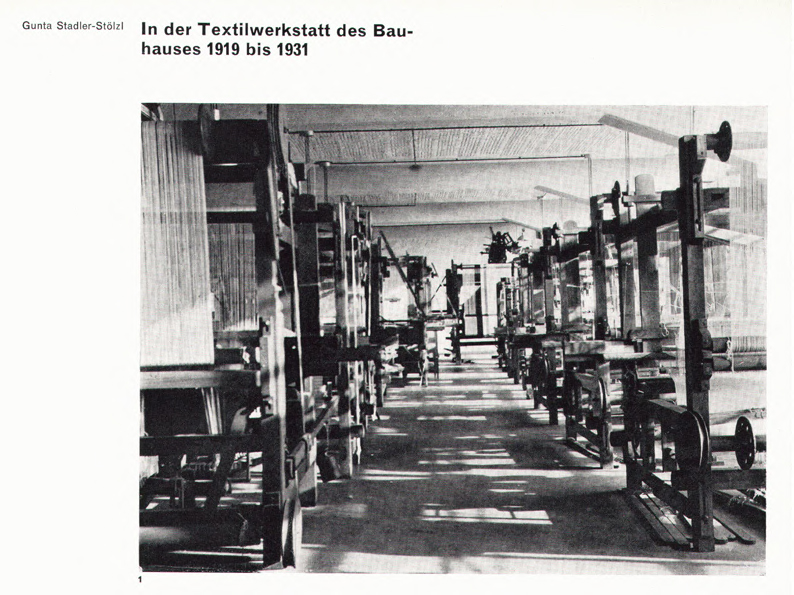
In retrospect, Gunta Stölzl (1897–1983) describes the humble beginnings at the Bauhaus in Weimar, the founding of the women's class, the establishment of the weaving workshop and the new industrial aspect in Dessau.
Throw, sample, 1927. Cotton and wool. Misawa Homes Bauhaus Collection
Source: Das Werk: 55. 1968.
BAUHAUS DESSAU 1926–1932
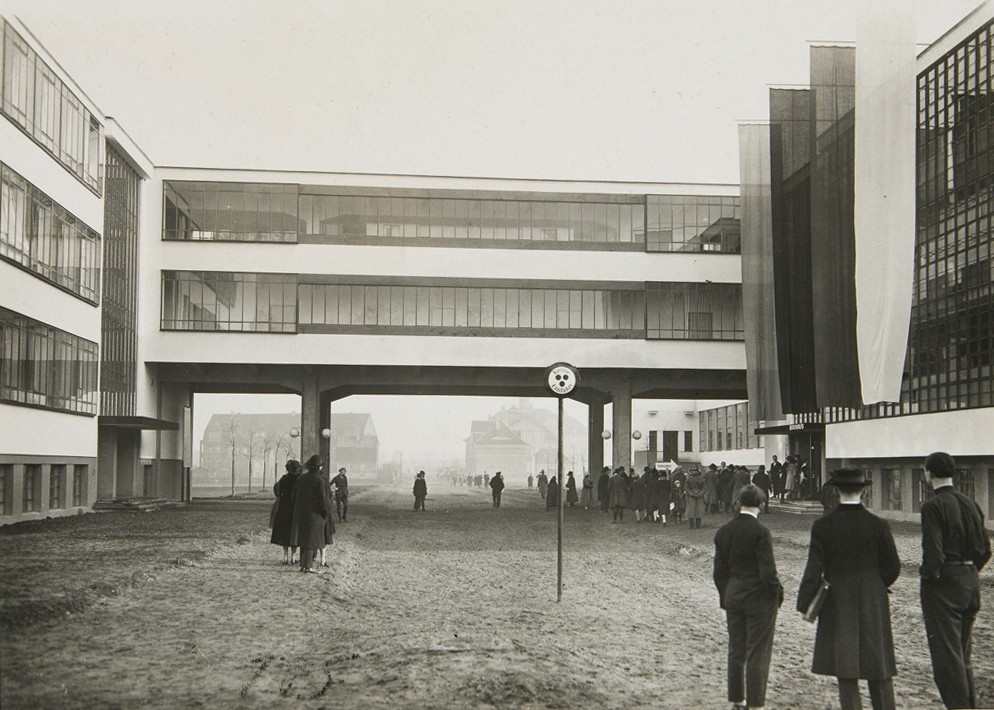
On 4 December 1926, the Bauhaus in Dessau was opened to the public in a simple and dignified manner.
An unusually large number of guests from all parts of Germany already gave the day its external significance, which without a doubt is historically a visible sign on the way to a new way of life. Expectation and longing were not only allowed to acknowledge the energy of an act which is to be set aside little, but also already a form, which rises far above all possible petty doubts, which became loud here and there. Thus the infamous question of »objectivity« or »romance« has little significance over the will and creative power expressed here.
This house is a visible sign of devotion to the environment; if I have understood its meaning correctly, it only wants to serve. Serving the life that surrounds it, the work that emanates from it. This life, this function, this work wants to put it out visibly. May the light and the clarity, which are inseparably linked to the building in an unusual way, become symbol and stimulus for the work that emanates from it. The most precious task is yet to come. We hope and wish that Gropius and his helpers will be allowed to bring to full effect what was so happily initiated.
Adolf Peter Rading (1888-1957), German urban planner and architect of the »Neues Bauen« movement, worked in Palestine/Israel and Great Britain after 1933.
BAUHAUS JOURNAL 1926–1931

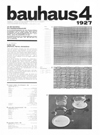
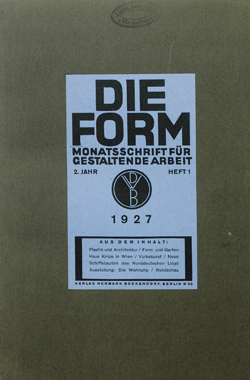
1926 1927
timeline
new building new beginning
dessau
housing
dessau-törten
steel house
petersschule
focus on stage
schlemmer
propaganda
theater total
weissenhof estate
furniture design
hannes meyer
palace of nations
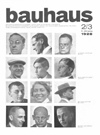

1928
offer-work
photography
typography
appartment
double issue
albers
interviews
meyer
painting
advertising
tel aviv
lighting
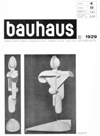
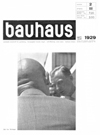

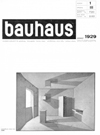
1929
society materialis
building + living
bach-fugue
small appartment film rhythm
painting + film
crafts + industry
junkers
advertising
children
architecture
focus on stage
oskar
schlemmer
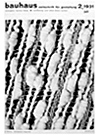
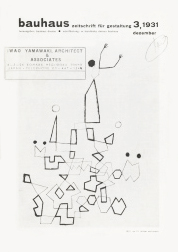

gropius, moholy-nagy
meyer, kállai
1931
small appartment
albers
typography
gunta stölzl
paul klee
hilberseimer, albers, kandinsky
FROM GROPIUS TO MEYER 1928
”
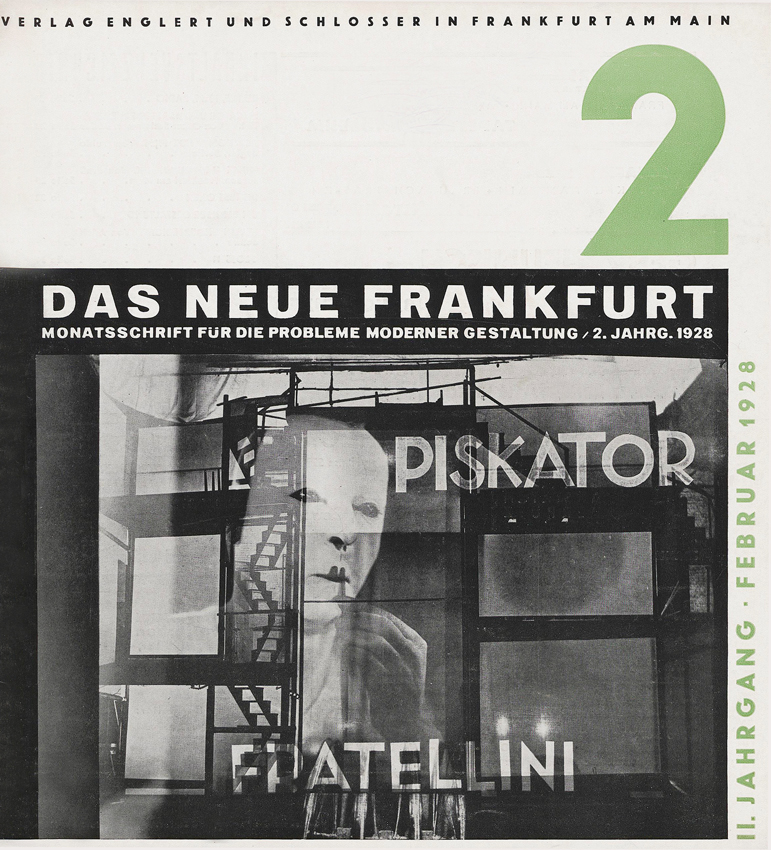
I intend to leave my previous sphere of activity and to develop my strengths in a field of work that is not restricted by official duties and considerations. The Bauhaus, which I founded nine years ago, is now firmly established, which is expressed in the increasing recognition of the institute and the growing rush of students. [...] The current head of the construction department, Hannes Meyer, has been proposed by me and the Bauhaus Master Council as successor. [...] He received a prize at the competition for the League of Nations Palace in Geneva. He also became known for his works in the field of free art and modern theatre, as well as for various publications. In the spring of 1927 he followed the call to the Bauhaus.
Walter Gropius in his press release, 05.02.1928
Das neue Frankfurt 2/1928. Source: University Heidelberg
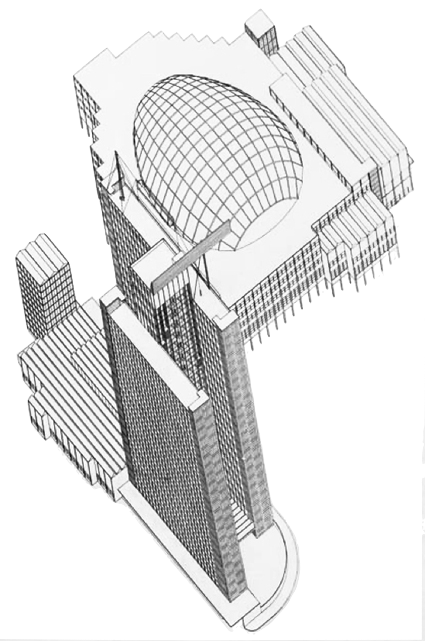
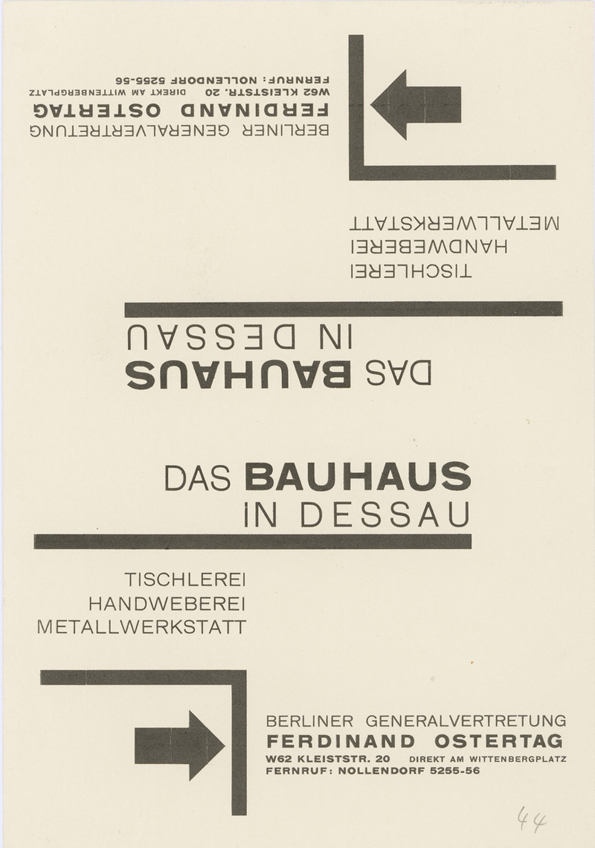
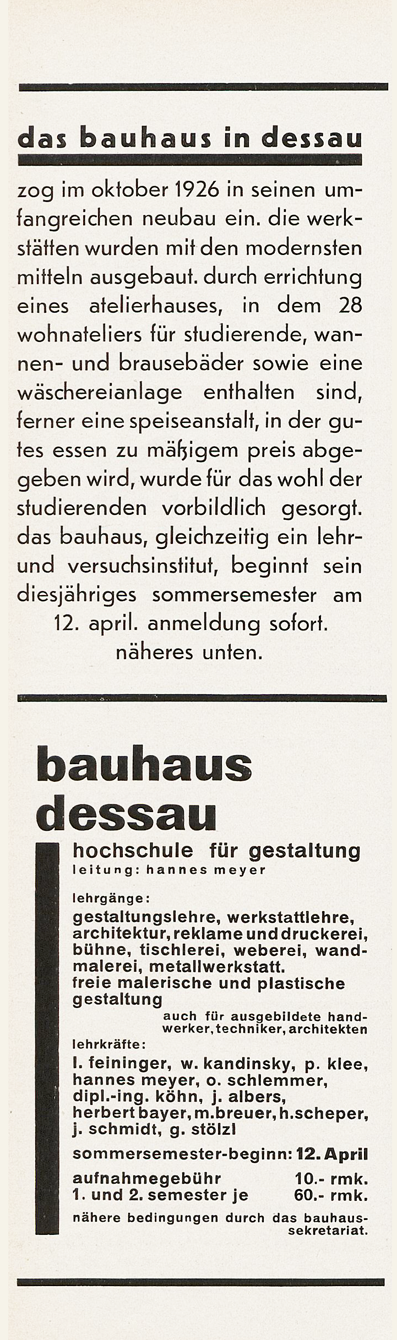
BAUHAUS ADVERTISING
whether wallpaper, whether fabrics:
bauhaus 33!
bauhaus wallpapers and bauhaus fabrics are signposts of good taste. they fit into any home, are discreetly patterned and enlivened by friendly and harmonious shades. quality and value for money unsurpassed.
wallpaper factory rasch, bramsche and baumgärtel, vogtland

László Moholy-Nagy, leaflet for Bauhaus Dessau, 1925-1928. ©The Moholy-Nagy Foundation
Unknown designer, from: Form, 1933. Source: University Heidelberg
Design:
Herbert Bayer. From: Das neue Frankfurt, 1928
HANNES MEYER
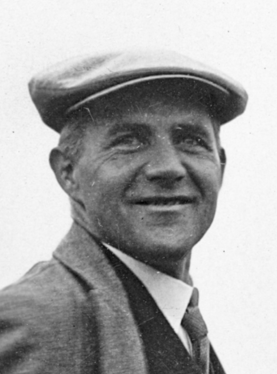
Because Hannes Meyer (1889-1954) had supported a group of students supporting striking miners, he was dismissed at the instigation of the Lord Mayor of Dessau, Fritz Hesse. With seven Bauhaus students he moved to the Soviet Union to tackle large construction projects, which, however, were not realized within Stalin's sphere of influence - the dictator preferred palaces in the style of the Lomonossov University in Moscow. In 1936 Meyer returned to Switzerland, where in 1939 he built the children's home in Mümliswil for a former patron; it remained the only commission. From 1939 to 1949 he tried his luck in Mexico, where success was also lacking. Back in Switzerland, the effects of the Cold War hit him, and he was not welcome in the GDR either. Meyer worked in his wife's studio, the weaver Lena Meyer-Bergner, a former Bauhaus student, and died in Lugano in 1954. It was only many years later that his work as an architect was rediscovered and appreciated.
Source Thomas Huonker: A former orphanage pupil and Bauhaus director is building a children's home.
Hannes Meyer,
1928
FROM MEYER TO MIES 1930

Hannes Meyer informs: »The former director of the Bauhaus Dessau, architect Hannes Meyer (who was reprimanded by the Dessau magistrate for his Marxist convictions by immediate dismissal), has been appointed by the Soviet government to Moscow into the central organization of the young technical-industrial generation GLAWPROMKAD.« […]
The Bauhaus informs: »At its meeting on Sept. 9, 1930, in which all professors and full-time teachers took part, the Bauhaus teaching staff commented on the change in the management of the institute and unanimously passed the following resolution: In full appreciation of the personality and the work of the previous Bauhaus director Hannes Meyer, which was carried out with the best of intentions, the masters acknowledge that the development of the conditions within the Bauhaus made a change in management necessary in the interest of the preservation and prosperous further development of the institute. They unanimously express their confidence in the new director of the Bauhaus, Mies van der Rohe, and are convinced that under him the institute will be able to carry out professional and fruitful work.«
Das neue Frankfurt, 12.12.1930. Source: Heidelberg University
The press writes: »On the ocation of the opening of this year's winter events of the Circle of Bauhaus Friends, the new director of the Bauhaus Dessau, Mies van der Rohe, made interesting statements about his future plans. With the help of his friends at home and abroad, Mies van der Rohe wants to involve well-known personalities in guest courses and exercises at the Bauhaus. In addition, the suggestion to set up a similar institute in America based on the model of the Bauhaus Dessau and to set up an exchange of teachers and students between it and the Bauhaus Dessau should be taken up.«
THE END OF THE BAUHAUS DESSAU 1932
”
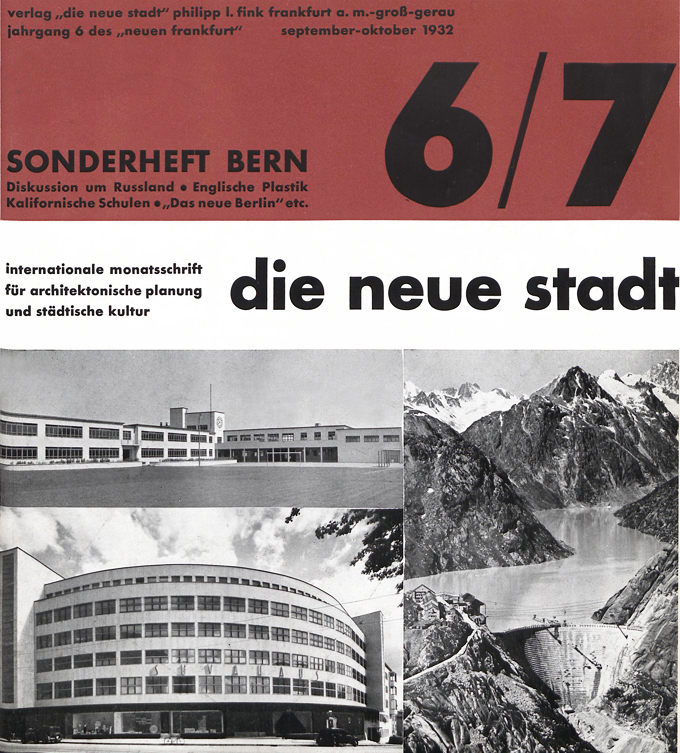
One of the grotesque impossibilities of today's cultural situation is that the Bauhaus could be dissolved with the active and passive participation of those parties who describe themselves as social, even proletarian. For there is no question that the Bauhaus Dessau was the only art school far and wide to take seriously the postulates of a social art education, an art pedagogical reform on the basis of today's economic conditions, while almost all other art schools raise a trade which lacks any sustainable ground today! The Communist Cell, which existed under Hannes Meyer at the Bauhaus, seems to have become the red cloth for the city councils of Dessau, although Mies van der Rohe immediately relegated this group of pupils, and when Schultze-Naumburg, in his almost embarrassing lack of understanding for a contemporary artistic work, pronounced his verdict, the fate of this school was decisive.
Joseph Ganter, The abolition of the Bauhaus, from: neue stadt, 1932. Source: Heidelberg University Library
”
History must note that an important document of German creation and at the same time a educational institution of incomparable originality has been destroyed for purely tactical, party-political reasons.
Wilhelm Lotz, responsible editor of DIE FORM. Source Heidelberg University Library
”
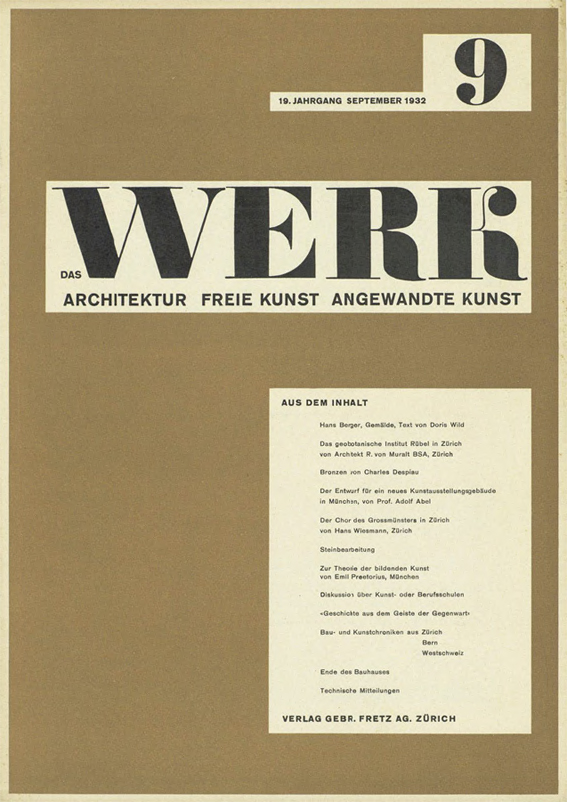
In Weimar, however, Schulze-Naumburg erased the last memory of the Bauhaus when he was appointed director of the Weimar Bauhochschule in 1930 by the then Thuringian National Socialist Minister of Education, when he had Schlemmer's frescoes painted over in the school's workshop building. Today, reactionary hot spurs even call for the demolition of the building that Walter Gropius created for the Bauhaus in Dessau! - but they will probably consider destroying a million-dollar building a little longer.
Hans Eckstein (1898-1985), publicist and art historian
Source: Bibliothek ETH Zürich www.e-periodica.ch
MoMA NY 1938: BAUHAUS 1919-1928
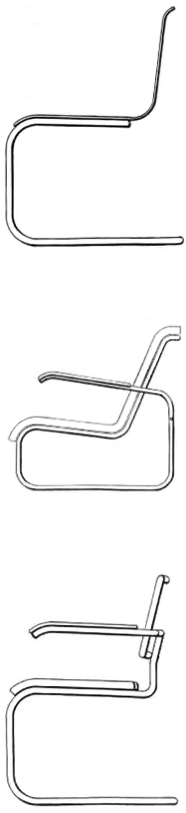
Walter Gropius did choose only his personal timeline for the first international exhibition about the Bauhaus. The presentation and documentation at the MoMA in New York was teamwork with his wife Ise and old friend Herbert Bayer.
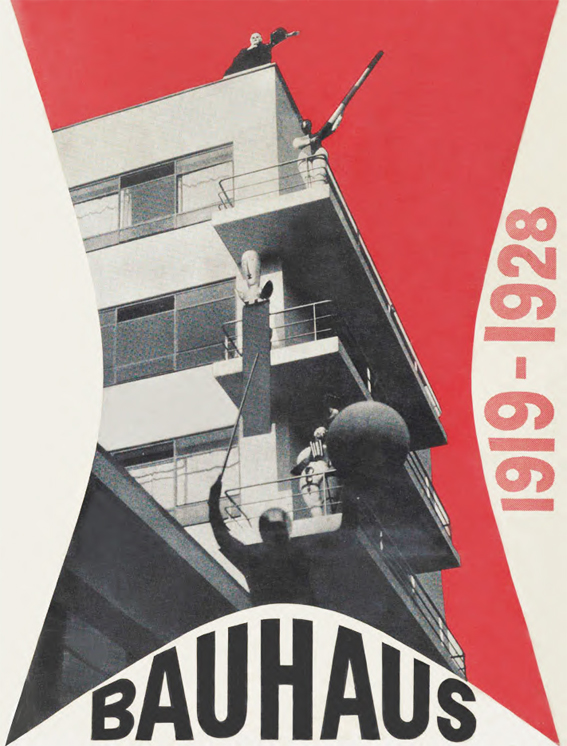

The catalogue cover by Bayer is based on a photo by Erich Consemüller. The performance »Das Gebäude als Bühne« by Oskar Schlemmer can be seen in front of the Bauhaus Dessau.
BAUHAUS IN GDR 1970s
form + zweck, the magazine for industrial design from East Berlin – German Democratic Republic – published two special editions on the Bauhaus.
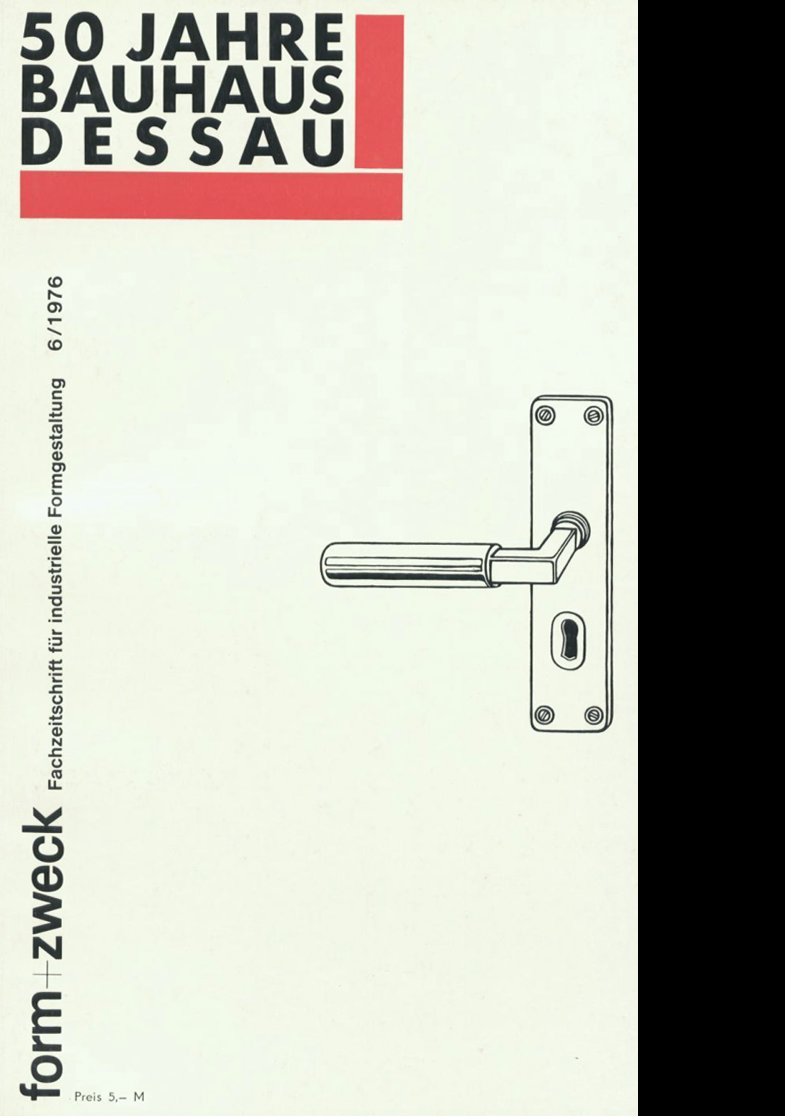
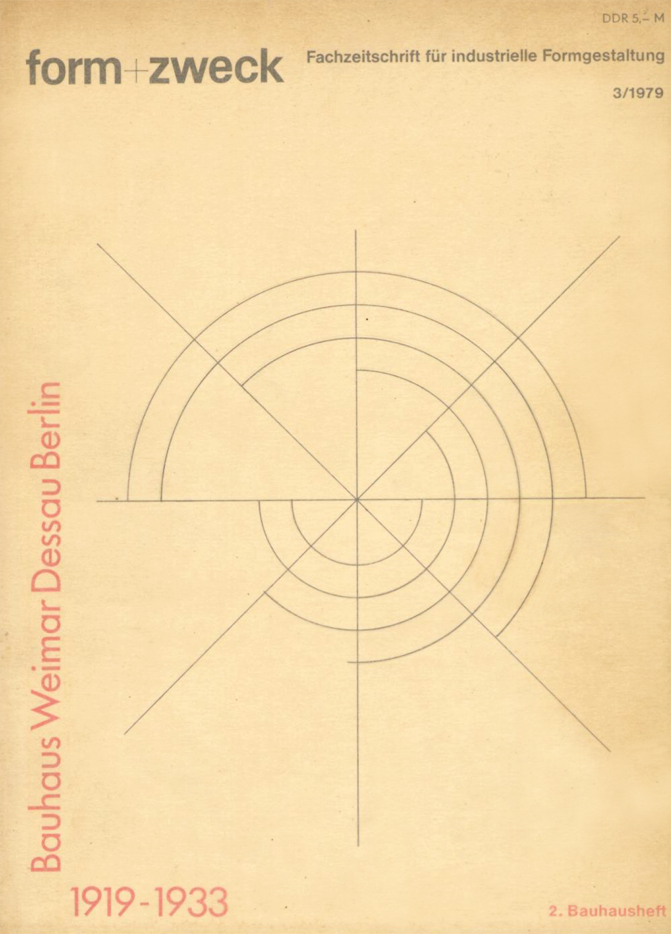
1. Bauhaus Special 6–1976
50 Years Bauhaus Dessau
The title was published on the occasion of the reopening of the Bauhaus building. With contributions by Selman Selmanagic, Claude Schnaidt or Konrad Püschel. More about Georg Muche and his work, about the Stahlhaus in Dessau and about (the Marxist) Hannes Meyer.
2. Bauhaus Special 3–1979
60 Years Bauhaus Weimar
Included are historical texts from the Weimar period and the memories of the Bauhaus people. In the magazine there was a supplement, the »Bauhaus Product Typology«, in which the design development of Bauhaus products was illustrated.
BAUHAUS PRODUCT TYPOLOGY
This typology provides an overview of important Bauhaus design products. They are arranged chronologically within the larger development stages of the Bauhaus:
1919-1923 predominantly handicraft production, phase of searching and experimenting
1923-1925 Creation of the basis for industrial shaping
1925-1928 Development of industrial design in the workshops
1928-1930 intensified scientific-experimental development work
1930-1933 Decline in design work for industry; restriction of workshop operations
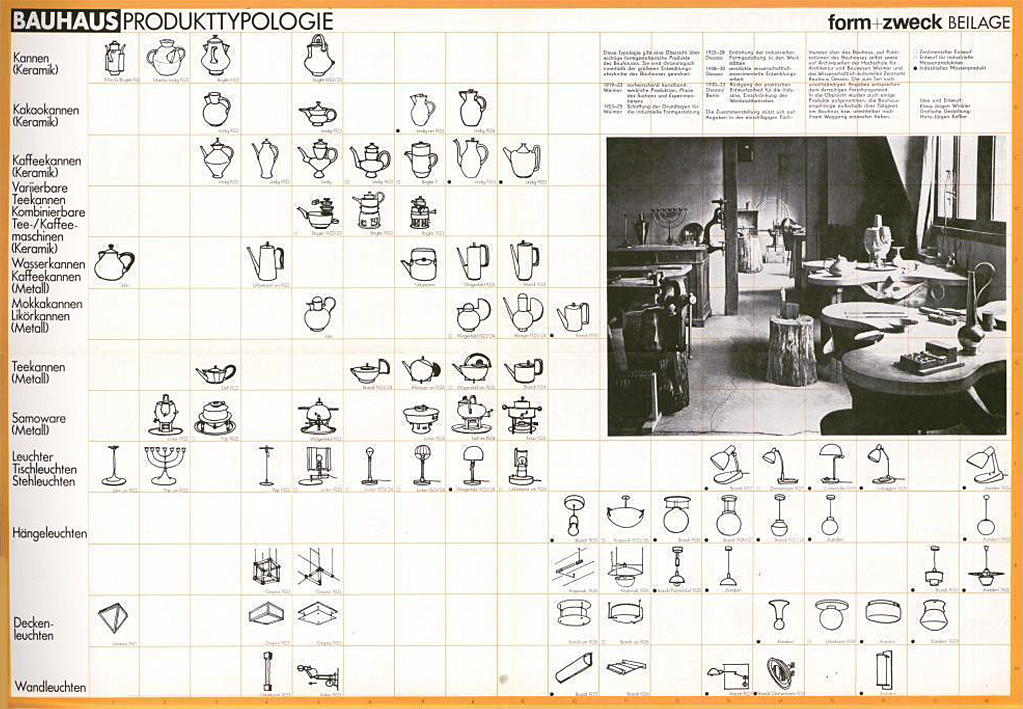
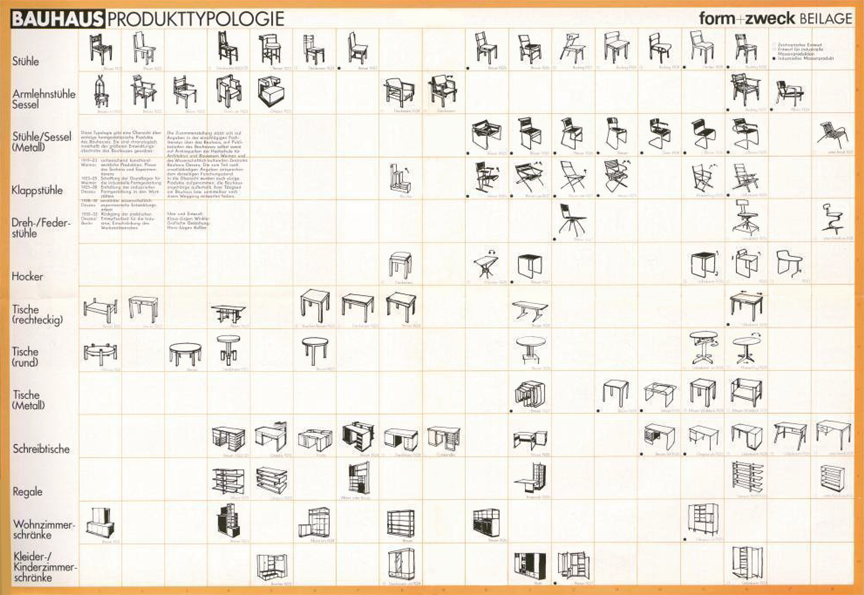
form + zweck Bauhaus product typology - poster supplement to the 2nd Bauhaus magazine 1979. idea and design: Klaus-Jürgen Winkler, graphic design: Hans-Jürgen Keßler. Source: SLUB Dresden
WOMEN AT THE BAUHAUS
KARLA GROSCH
”
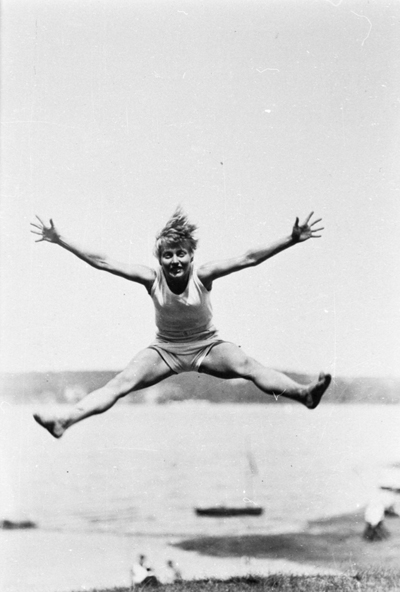
I have a childlike joy when I feel how I have my body in control, how I can make demands on it, how it gives in, how it functions, and I can lose myself completely in its performance possibilities.
Karla Grosch, Sports School S. Deutsch, Berlin, 1928, unknown photographer. Zentrum Paul Klee, Bern, donation from the Klee family
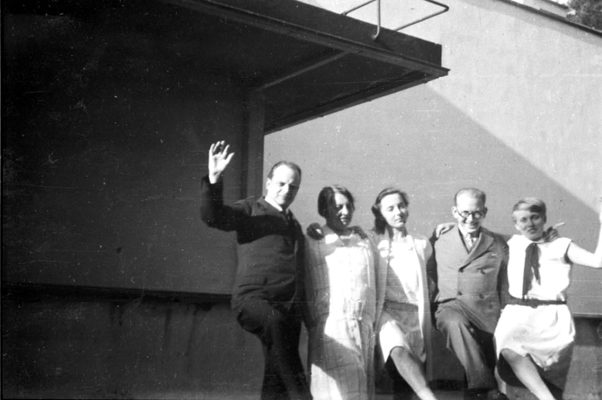
Paul and Lily Klee, Gret Palucca, Herbert Trantow, Karla Grosch, 1927. Photographer: Felix Klee. Zentrum Paul Klee, Bern © Klee Estate
”
Fräulein Grosch was a valuable member of the stage department headed by Professor Oscar Schlemmer. She rehearsed dances and movement studies and, thanks to her own artistic and dance skills, was able to carry out independent tasks in various individual and group performances.
From Mies van der Rohe's work reference, 1932
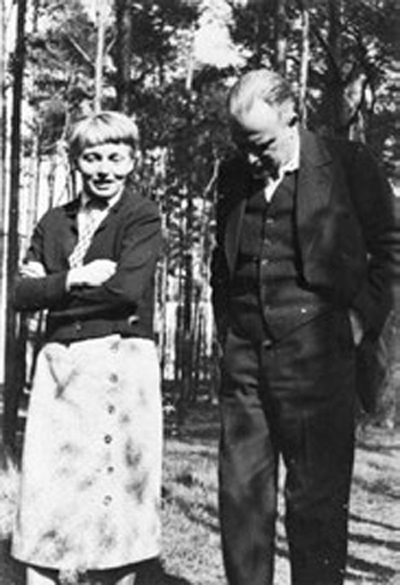
Karla Grosch and Paul Klee, Stresemannallee, Dessau, April 1933, Photo: Franz (Boby) Aichinger © Zentrum Paul Klee, Bern, Bildarchiv
The author Seraina Graf not only gives a deeper insight into the life of the dancer, teacher and friend of the Klee family, but also into the tragic circumstances of their early death.
Aus: Zwitscher Maschine No.5 2016 – Journal on Paul Klee, Paul Klee Zentrum Bern
work in progress
more to see on my blog

downloads may only be used for private purposes